Strategy and storytelling
Secret Weapon #005
09 April 2025
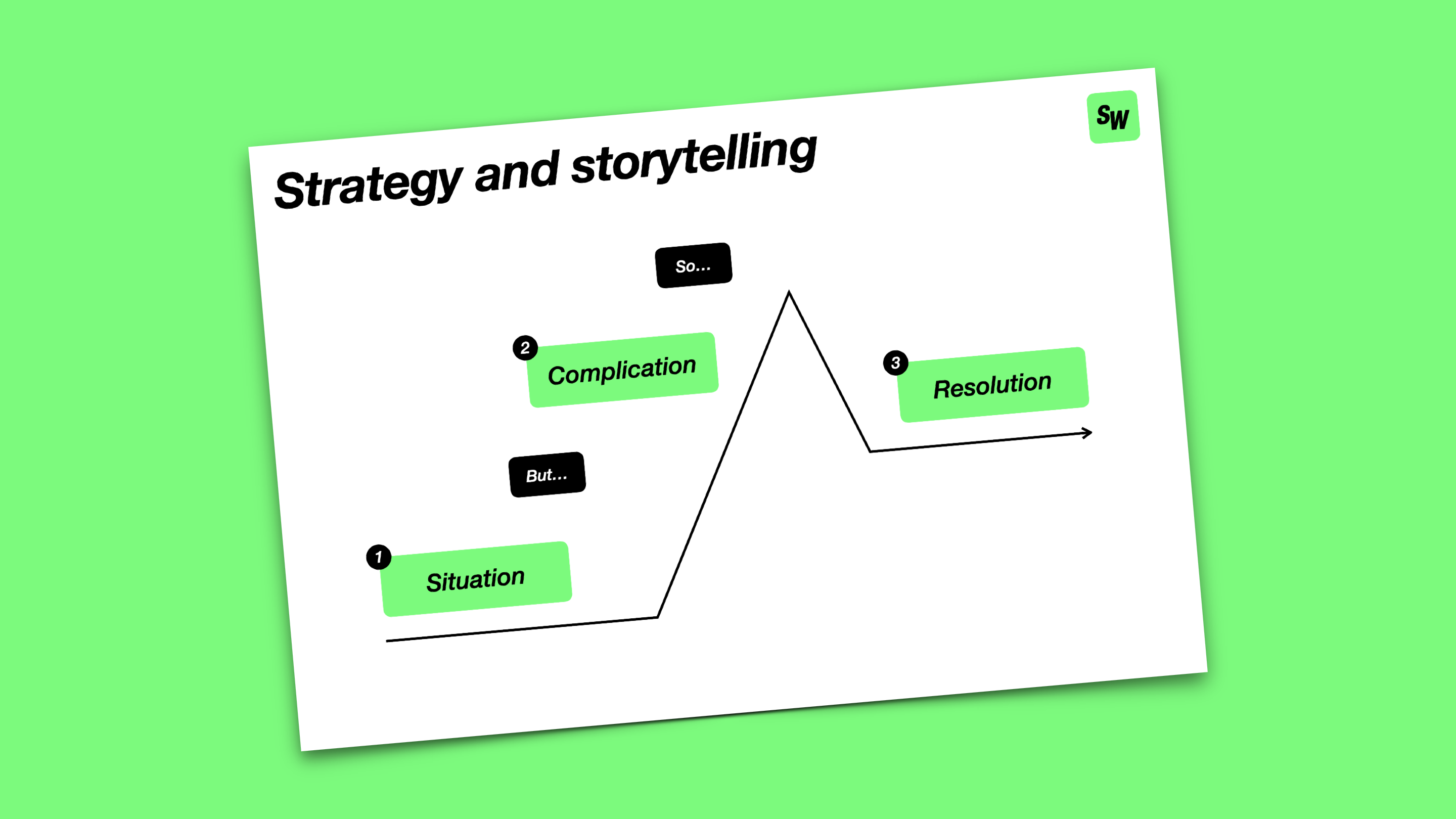
Most strategy work boils down to analysing a problem and forming a recommendation to solve it. But many projects stumble at the end, let down by poor communication to the person who needs to be persuaded to act. You can avoid this by structuring your pitch rigorously, so it’s as easy as possible to get on board with.
My go-to for this is the classic SCR framework:
- Situation: present the essential facts so that everyone has shared context
- Complication: identify the problem that needs to be fixed, and what is driving it
- Resolution: provide a clear, actionable recommendation to solve the problem
This is really just the simplest possible version of a classic story arc: establish the world / character for the audience, introduce a crisis that upends the status quo, and then have the protagonist rise to the challenge and emerge victorious.1
When you’re using this approach in a professional context there are a few things worth paying attention to:
- Keep your description of the situation focused. If your audience is highly knowledgeable then you can skip broad context and go straight to specifics.
- Be as straightforward as possible. Stating the complication clearly and confidently is much more persuasive than a vague diagnosis or hedging your bets.
- Putting the resolution first (i.e. RSC) can create increased urgency. This typically works better when people are already aligned with your recommendation.
In any case, it’s important that your recommendation is properly backed by compelling arguments and evidence. I’ll tackle that in a future post!
-
If you’re paying attention closely then you’ll have spotted I used this framework to structure the first paragraph of this post. ↩