From inputs to impact
Secret Weapon #011
20 May 2025
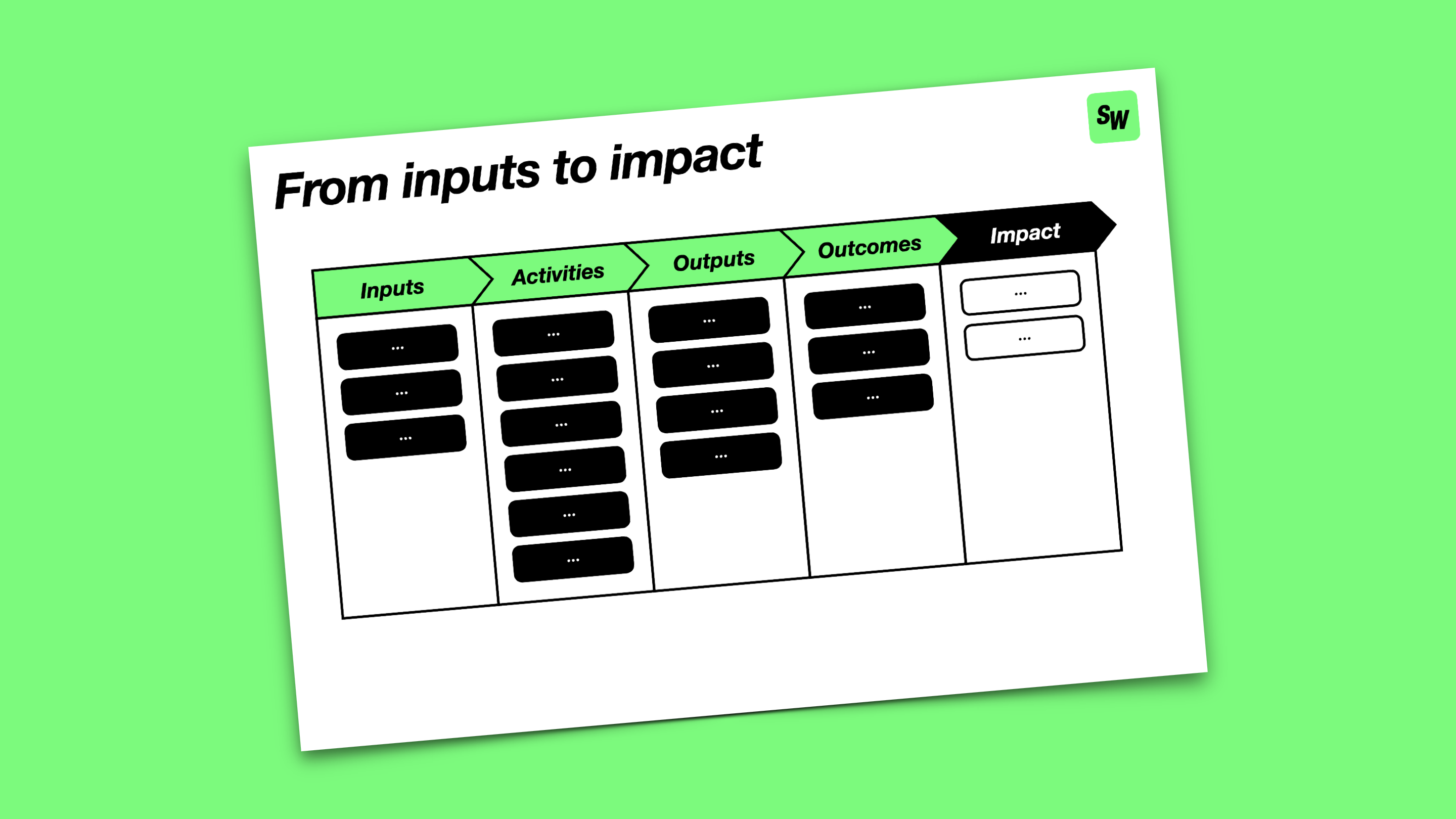
There’s a lot of merit in setting unambiguous goals and then giving people / teams plenty of freedom to execute in ways that will maximise their likelihood of success.
At the same time, it’s useful to have a clear conceptual framework for the task at hand. This helps ensure that there’s an underlying logic to the approach and that the right things get measured.
A good theory of change encapsulates the following:
- Inputs: resources to be invested, e.g. people or capital
- Activities: concrete actions that will be taken
- Outputs: tangible products produced by the activities
- Outcomes: changes in the world expected as a result
Teams can use this framework to build a theory of change together, drawing on a range of different perspectives and experiences. Typically most of the inputs are taken as a given, and you build out from them toward the target outcomes.
The final stage – beyond outcomes – is impact. This comes into play toward the end of a project or planning cycle, when you need to get a handle on what was ultimately achieved vis-a-vis the original goal(s).
A good working definition for this is as follows:
- Impact: outcomes adjusted for (a) what would have happened anyway, (b) the actions of others, and (c) unintended consequences
Measuring impact can be challenging, particularly in more complex operating environments. Having a coherent theory of change doesn’t magically solve this problem – but it does provide a logical structure to frame your conclusions.