Disagree and commit
Secret Weapon #017
13 August 2025
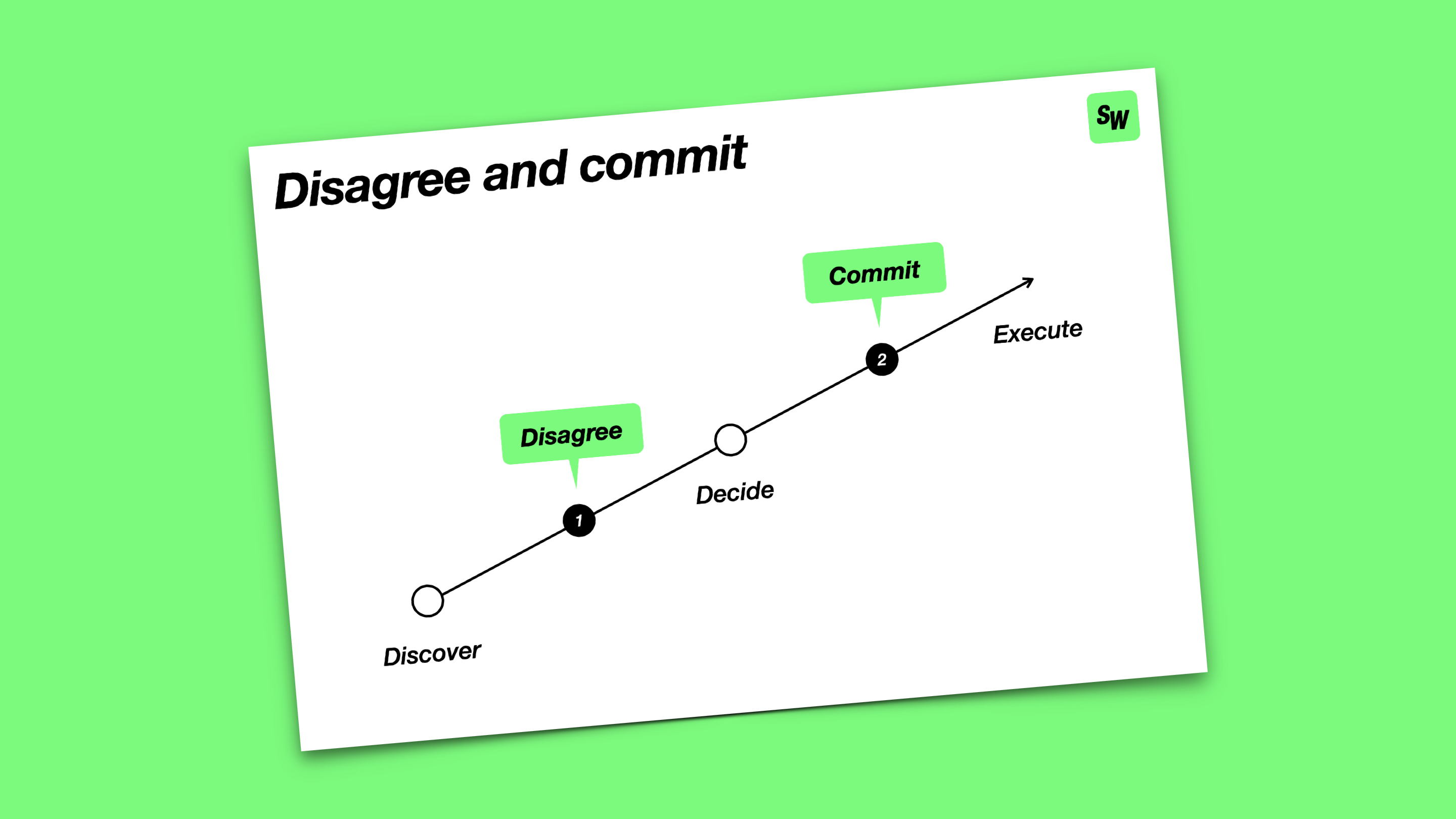
Teams working to solve complex problems need to do at least two important things:
- Figure out the best course of action
- Get it done
One of the biggest challenges is that these two things are often in tension.
Sometimes we’re working with limited information or a lot of uncertainty, and it’s attractive to put off taking action so we can find out more or get a better sense of what direction things are heading in. But if you let this go on too long it’s easy to end up with decision paralysis or miss the moment of highest leverage.
Other times the imperative to act can feel overwhelming, leading teams to skip the deep thinking and rush into tactical execution. The absence of a properly considered strategy can come back to bite you. But perhaps the bigger risk is hidden misalignment that erodes long-term buy-in to the mission.
Every situation is different, of course, and there isn’t one right answer for the optimal balance between thinking and acting.
There is, however, a good set of habits teams can foster to get both done as effectively as possible:
-
Disagree. Groupthink is a big risk when grappling with complex problems, so it’s really important to create a safe space for people to ask questions, challenge assumptions and share feedback with each other. When I was a consultant, speaking up rather than holding back was expected regardless of seniority – we called it the “obligation to dissent” and it applied to everyone.
-
Commit. No plan will ever be perfect, but sooner or later it will need to be put into practice. Once a course of action has been set, everyone should be prepared to set their individual preferences aside and get behind it. Being clear about this anchors expectations and helps everyone to stay focused on the job to be done: making every effort to execute successfully.
This isn’t always easy, particularly in very hierarchical or decentralised environments where people are used to being deferential to authority figures or acting unilaterally. But the payoff from challenging each other and then pushing in the same direction is real, and almost always worth the effort.