Ask open questions
Secret Weapon #016
22 July 2025
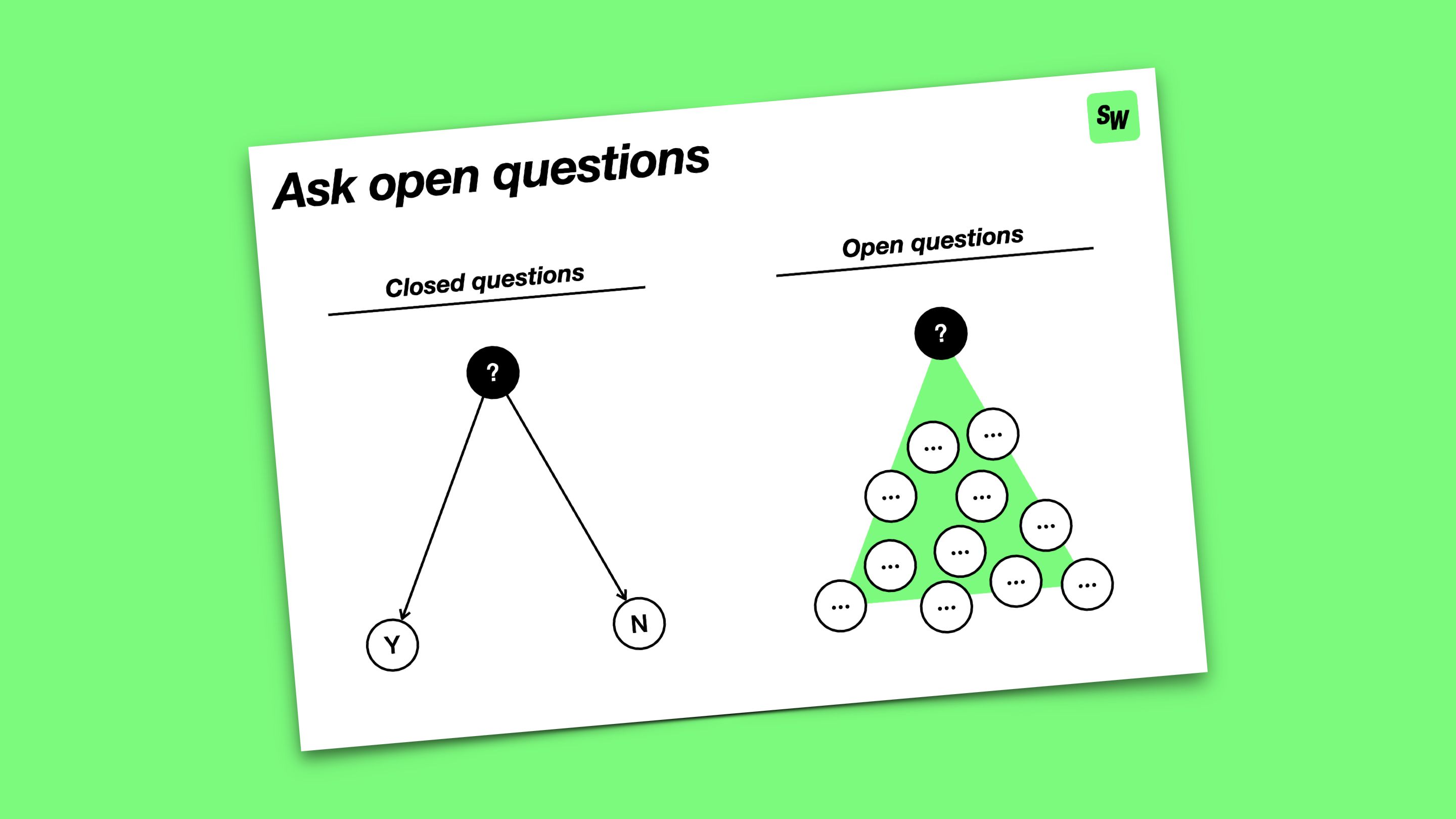
Questions are essential for soliciting information and understanding someone else’s point of view. But not all questions are created equally – and the sorts of questions you ask can make a big difference to their effectiveness.
Closed questions typically elicit a one-word response like “yes” or “no”. These can be powerful when you are under time pressure or you need extreme clarity on a well-defined situation, as they can be answered without ambiguity.
Over the years I’ve seen a lot of people ask closed questions and then be disappointed by a short answer (followed by a fair few awkward silences). I’ve also seen plenty of people trying to break out of being asked a closed question, and not always to the questioner’s delight (we all recognise variations on the dreaded “no, but…” answer).
This is typically a sign that an open question would have been a better starting point. These invite the respondent to answer freely in their own words, encouraging elaboration and exploration of the topic being discussed.
Open questions usually start with words like “what”, “how” or “why”. They don’t have to be long – and in fact concise questions are often easier for people to answer – but they should be intentional, for example to open up the discussion or probe in a direction of interest.
And if you do find yourself inadvertently asking a closed question, or you hear one being asked and sense that there’s more to unpack, then following up with an open question is a great way to move the conversation forward.